About the artist
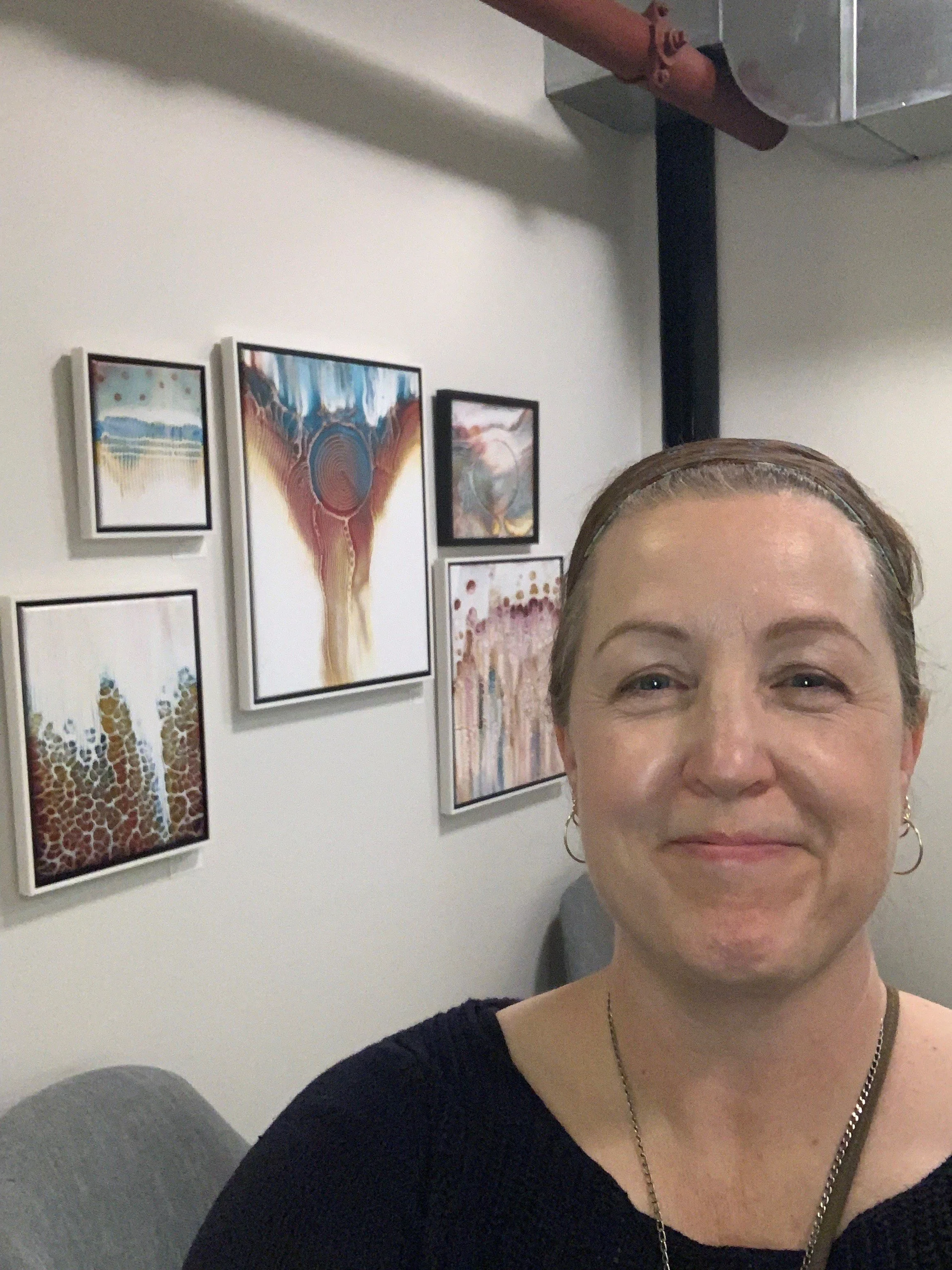
Kelly Durante is both an experimental biologist and a lifelong artist. With a background in biology, psychology, and anthropology and three decades working with cultured cells, it is no wonder many see scientific themes in her work. But for Kelly, art is an escape from science and a chance to depict fantastical landscapes or supernatural dramas, and to give form to ideas, emotions and dreams. Kelly’s works are featured in private collections, and she teaches her technique at the Columbia Art League in her hometown of Columbia, Missouri. Her work is on permanent display at the Bond Life Sciences Center on Mizzou campus, Serendipity Wellness Studios, Fluid Bodywork Massage, and Designs by Nadine. You can also find her art on Les Bourgeois Vineyards 2025 pinot noir bottle!
Kelly’s approach to acrylic pour painting incorporates experimental methods and techniques that she has developed to gain greater control over the structure of the final composition. In her distinctive “precision pours” she creates the shapes, ratios and patterns that are central to sacred geometry, paradoxically bringing order to an inherently unpredictable medium. The balance of order and chaos is at play in every piece of her work.
Where art meets science. (It’s all about the cells.)
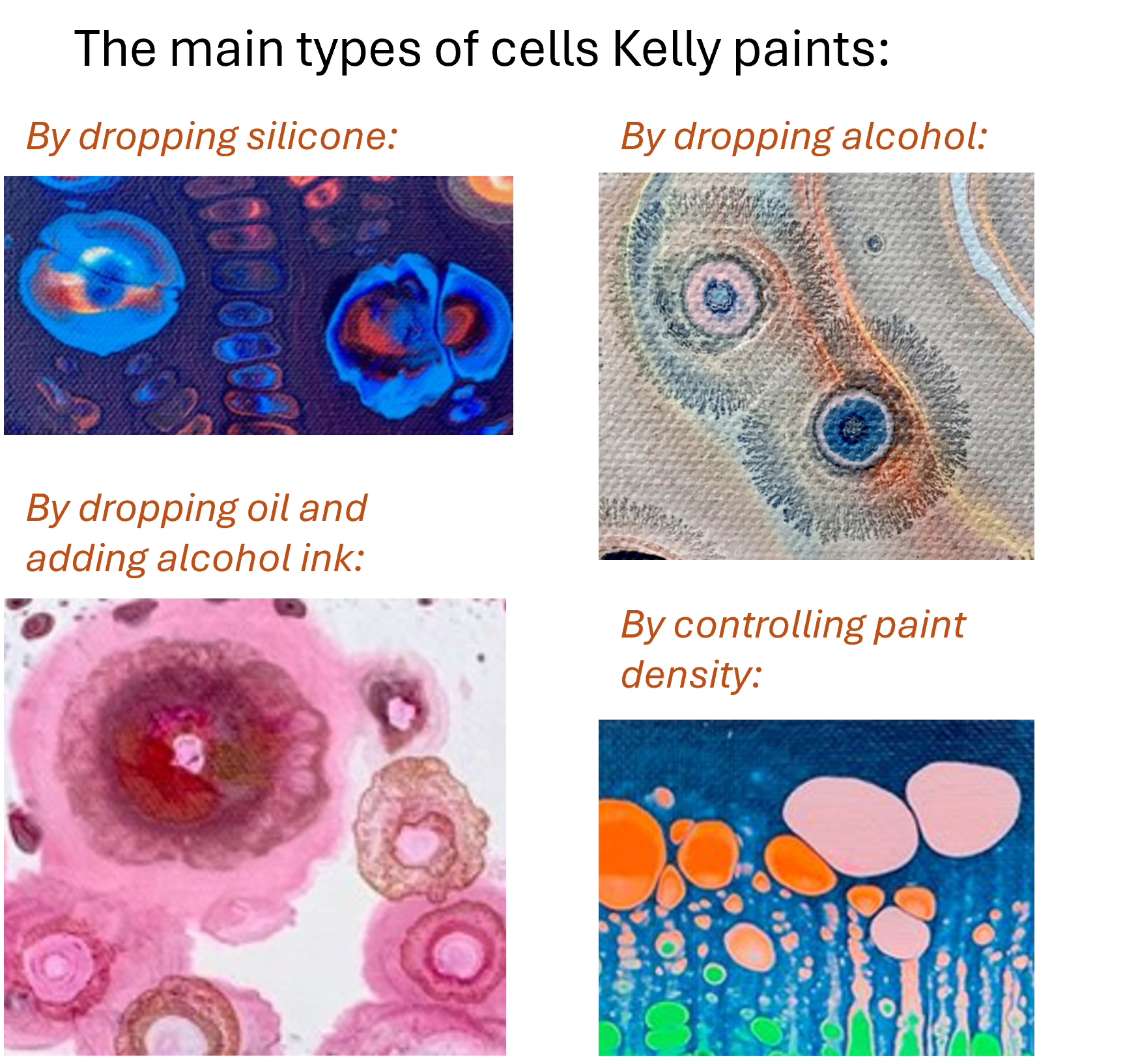
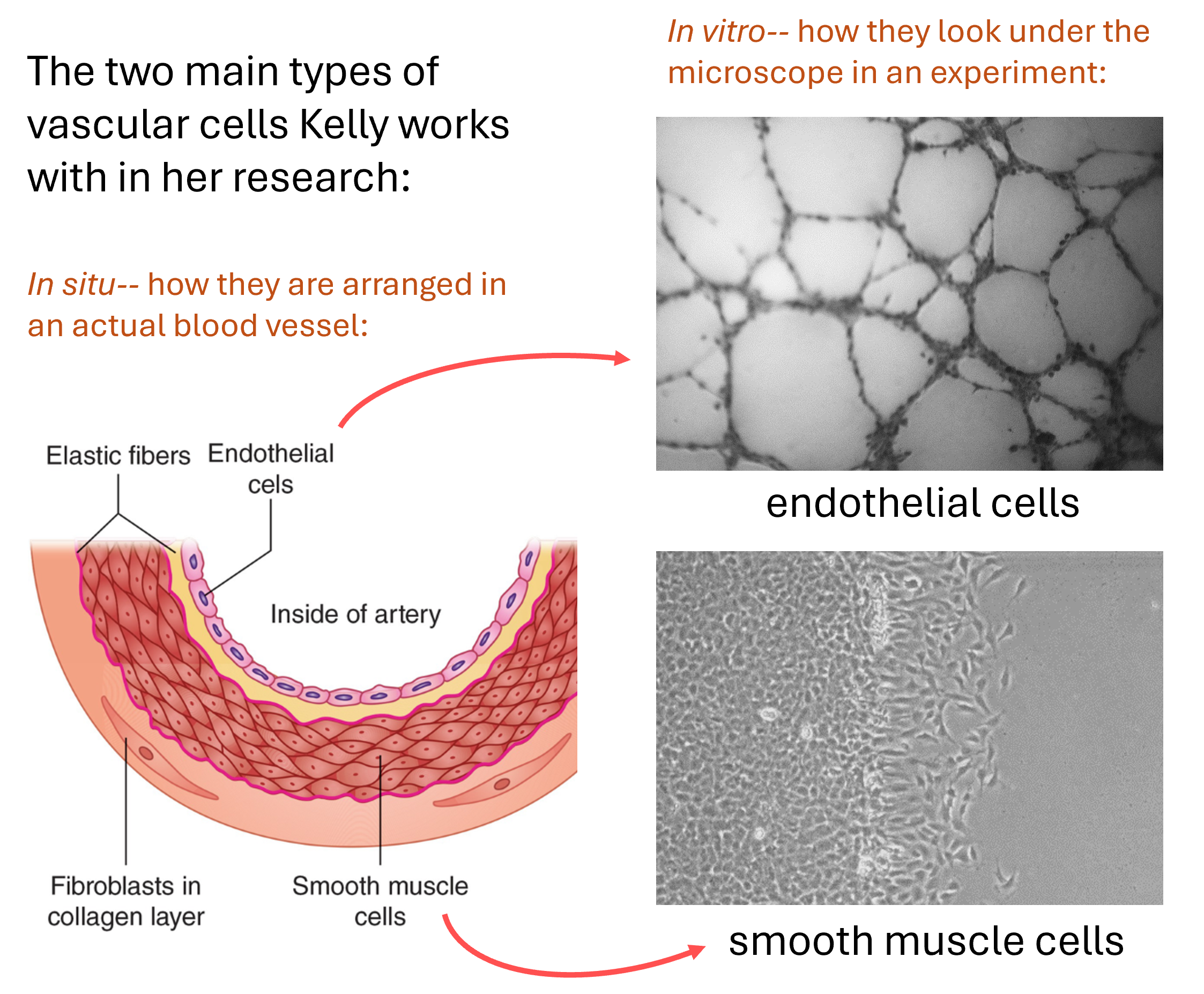
Kelly has maintained and experimented with vascular cells for decades in her career as an experimental biologist in academic research. So, when she first explored the medium of acrylic pour painting, she naturally gravitated to its potential to form “cells”— small round bodies within a painting. She learned different ways to make them appear, like adding droplets of oil to water-based paint so that cells randomly break through the surface tension throughout or intentionally layering lighter paint under denser paint to create luminous cloud-like cells where the light paint rises. She continued to explore, finding different ways to break through layers of color from above, like dropping silicone, alcohol or other media, to form what looks like nucleated cells or a virus with protein spikes. In her paintings, she does not recreate what she sees under the microscope but rather imagines cells breaking free from the petri dish and directly engaging with the beauty of the universe.
Get in touch.
Let me know if there’s anything you would like to know.